How does a Content Management System organize content?
The structure of CMSs determines how content is classified, connected, and displayed.
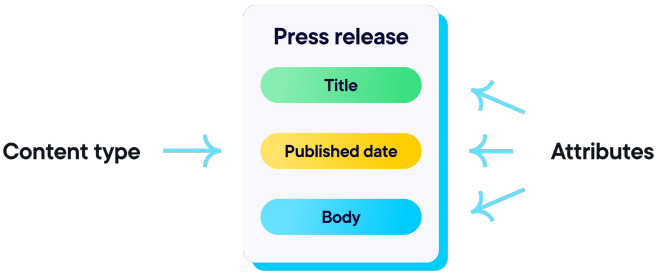
CMSs rely on content types — standardized formats that specify what type of information each entry should contain. Each type has a set of attributes, or pieces of specific bits of data, as well as a rhetorical function, or a specific communicative purpose. As a writer, it is important to know that CMSs tend to classify content types by attributes, while authors think it terms of rhetoric. There are no clear guidelines, however, between these approaches, that is why it is important to understand and see this distinction when creating content using a CMS.
In addition to content types, CMSs use taxonomies such as categories and tags to shape how information is retrieved and interpreted. They create hierarchies and relationships that allow both users and search engines to understand a website’s organization.
Content Management Systems transforms writing into data that carries meaning through organization. Through this organization Content Management Systems produce logically structured content that defines how writers and readers locate, use, and interpret information.
