How does a Content Management System work?
Creating digital content involves three stages: creation, storage, and design.
When writers create a website using a CMS, the content is stored as data within a database rather than a static web page. The CMS then uses a design template that determines how users can see the content. This way, the system separates content from presentation, allowing changing its content without changing its visual design, and vice versa.

Content Management Systems streamline digital content creation. Separating content from presentation, these tools make the process effective, flexible, and collaborative.
Core Functions
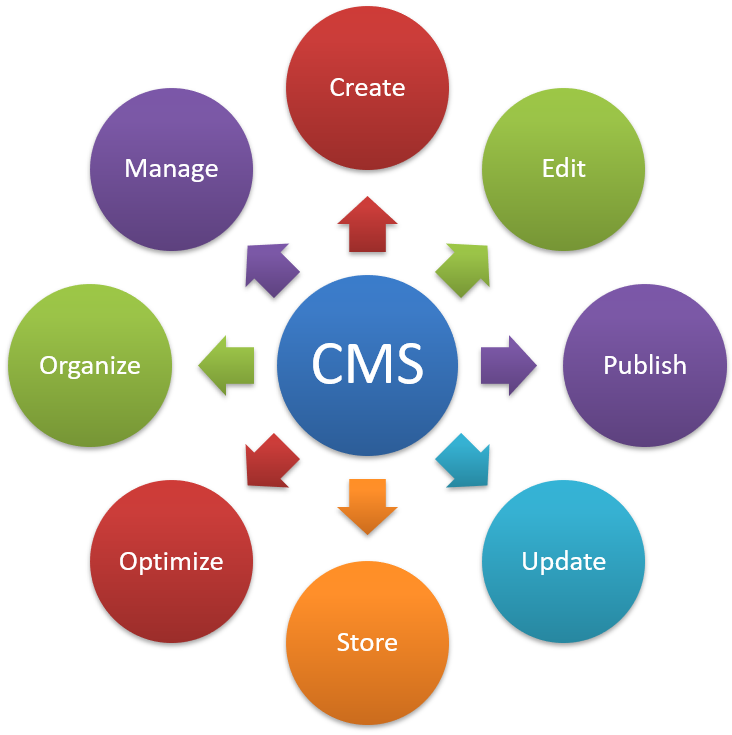
CMSs have mutiple functions that can be divided into the following main categories:
- Creation — a user-friendly platform for writing and editing content.
- Storage — a place for saving texts, images, and media files in a database with search and filter options.
- Organization — a system that uses categories, tags, titles, and metadata to organize information.
- Publishing — a WYSIWYG tool with a set of design templates that can automatically display content.
- Collaboration — a space that allows multiple authors to work on content simultaneously.