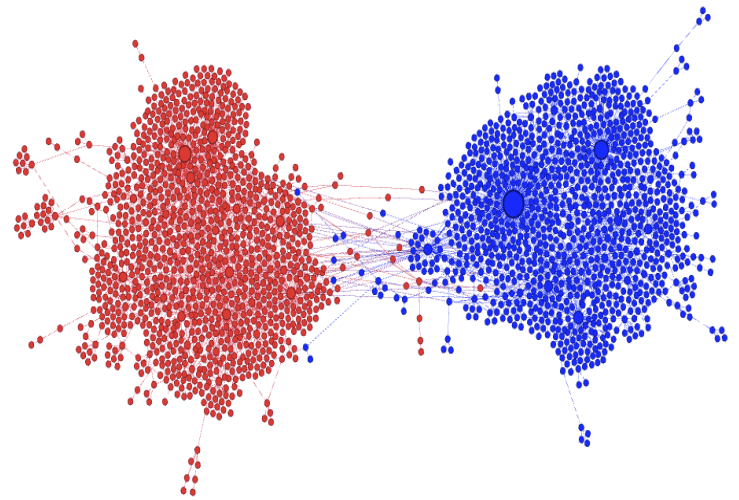
Echo chambers make it difficult to see other points of view.
According to the study Echo Chambers and Algorithmic Bias: The Homogenization of Online Culture in a Smart Society, (Department of Government Affairs and Administration, Universitas Muhammadiyah Yogyakarta, Indonesia) an echo chamber “makes digital spaces less representative of the diversity found in the broader world.” While this is true, we first must ask the question:
An echo chamber is an online space where social media users are continuously shown information, opinions and views that reflect and reinforce their own. In the study, researchers explain that these algorithms are designed to show users content that they are most likely to engage with, which unintentionally creates these online spaces. The more that users engage with this content, the more narrow the viewpoints become, creating a sense of belonging while also deterring them from seeing alternative opinions. The authors of the study argue that these echo chambers created a homogenization of online culture.
Each time someone engages with a piece of content, the data is tracked by the algorithm and used to refine the content they see going forward. The algorithm sees likes, comments, and watch time as signs of preference in content, and then proceeds to present that same content to the user again. The study presents the idea that these algorithms were created as a harmless way to create an enjoyable social media experience but then gradually became a method of widening cultural divide.
The researchers argue that the algorithms are not neural in their views, because they reflect the data that was given to them. The data being given to these algorithms can potentially be rooted in hatred or misinformation, but it does not care, because its only goal is to keep users on the platform. These algorithms are motivated by profit, which incentivizes them to present users with emotionally charged content it knows the user will watch. This creates a situation where whatever people think is true is a battle of narratives. Marginalized voices are not brought up to the mainstream because articles about whatever the “far left” or “far right” did that week makes people much more angry, and therefore more likely to click/watch/comment/view.
While this affects our political system, it also deeply affects people’s minds. When people are repeatedly exposed to content that they already agree with, their perceptions of the world become solidified through confirmation bias. Over time, these echo chambers start to feel like a community that people belong to, because of the constant feedback loop of the same viewpoints they see every day. According to an article from PubMed Central, This sense of belonging lowers critical thinking levels and raises emotional reactivity. The result is a group of individuals that see alternative viewpoints as a threat to their community and identity. The article argues as well that echo chambers shape not only opinions, but an individuals sense of self and belonging.